
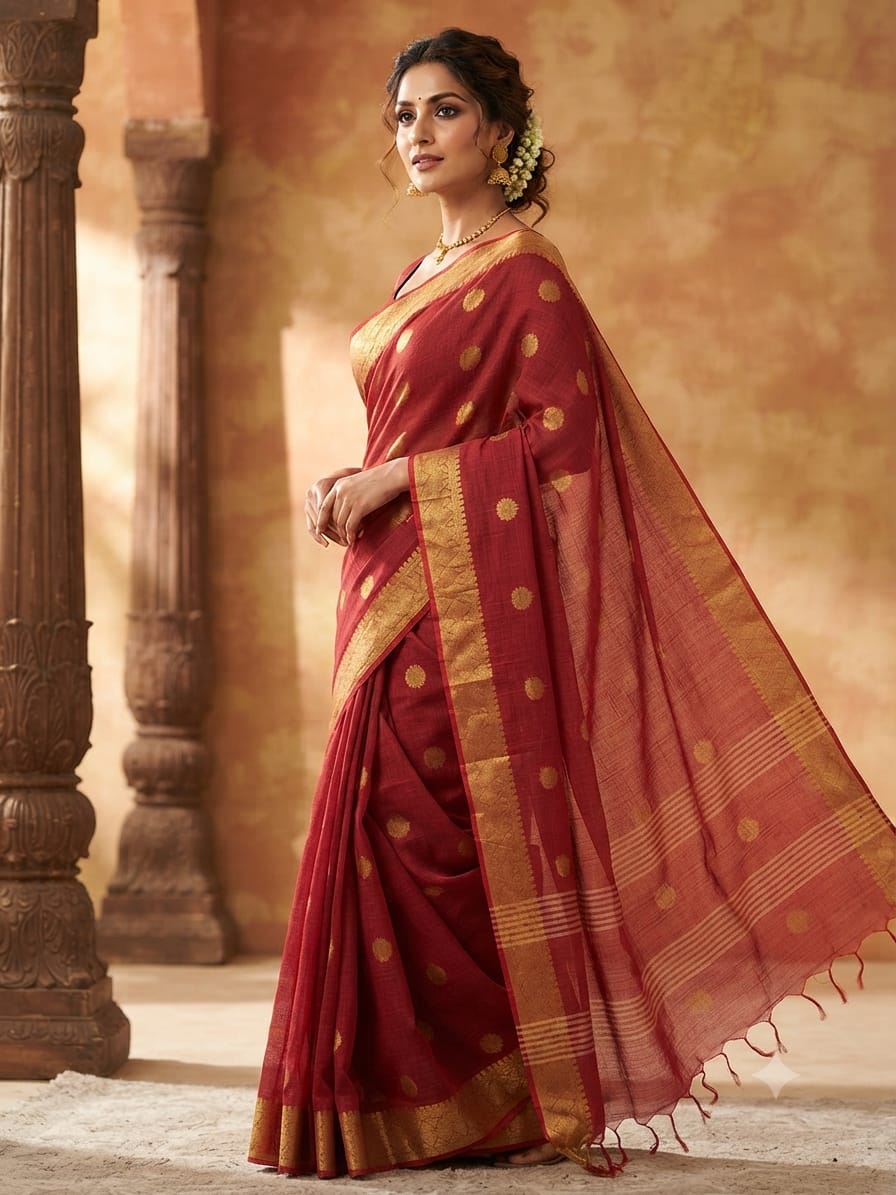
Bhagalpur · India’s Silk City
The silk story
Six yards, one thread at a time — how a silk saree is made, how to judge one, and what we check before it reaches you.
What silk is
Silk is a natural protein fibre, spun by the silkworm caterpillar to build its cocoon. It is light, strong for its weight, takes colour deeply and catches light the way no other fibre does — which is why it has dressed Indian weddings and festivals for centuries.
Mulberry
From silkworms fed on mulberry leaves. Smooth, even and bright — the silk of most Banarasi and Kanjivaram weaving.
Tussar (Tasar)
Wild silk from forest silkworms, with a natural golden-beige tone and a slightly textured hand. Bhagalpur is famous for it.
Eri
A soft, matte, warm silk from Assam and the North-East.
Muga
Assam’s golden silk, found nowhere else in the world.
India is the only country that produces all four kinds of commercial silk.
From cocoon to your drape
How a silk saree is made
- 01
The cocoon
Silk begins as one unbroken thread, spun by a silkworm around itself. A single cocoon holds a filament several hundred metres long.
- 02
Reeling
The cocoons are softened in warm water and the threads of several are drawn together into one fine, strong yarn.
- 03
Twisting & colour
The yarn is twisted for strength — Katan is two or more threads twisted together — washed of its natural gum for lustre, then dyed.
- 04
The warp
Thousands of threads are stretched along the loom. The border, the body and the pallu are planned into them before weaving begins.
- 05
Weaving & zari
The weft crosses the warp again and again. Metallic zari is woven in for the border, the buttis and the pallu.
- 06
Our check
We open every saree in daylight, check it thread by thread — weave, zari, colour, length — and photograph it exactly as it is.
The weaves we carry
Banarasi silk
From the looms of Varanasi: zari woven into the silk as buttis, borders and a rich pallu. The saree for weddings and pujas.
Shop Banarasi →Katan silk
Woven from twisted silk yarn, so it has body and a soft sheen. Holds colour and print beautifully.
Shop Katan →Tissue linen
Linen woven with a fine metallic tissue weft — light and airy, with an all-over gold glow.
Shop tissue linen →Embroidered Katan
Katan silk finished with thread embroidery — florals, vines and jaals worked over the body.
Shop embroidered →Each product page says exactly what the saree is made of. If you are unsure, ask us on WhatsApp before you order.
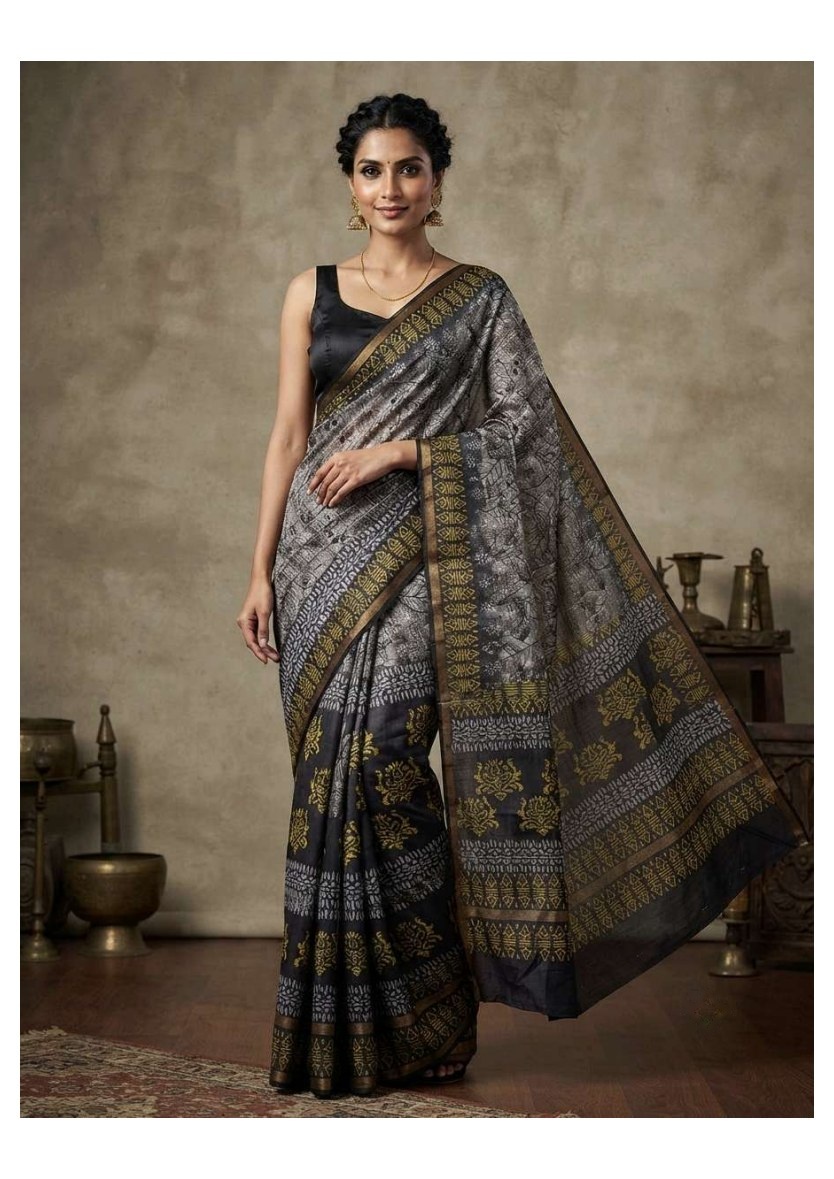
Zari, explained
Pure zari — a silver thread plated with gold. Rare, heavy and costly.
Tested zari — a copper core with a gold or silver finish. Bright, durable and the most common in fine sarees today.
Metallic zari — a polyester metallic thread. Light, lustrous and easy to care for.
How to judge a silk saree
- Look in daylight. Silk changes colour with the light; daylight shows its true shade.
- Turn it over. The reverse of a woven motif tells you how it was made.
- Feel the drape. Silk falls in soft folds and warms quickly in the hand.
- Check the zari. Even, unbroken and firmly woven into the border and pallu.
Our part
Chosen piece by piece. Checked thread by thread.
Chosen by us
We work directly with the weaving houses and choose every saree ourselves, one at a time.
Checked in daylight
Weave, zari, colour and length are checked before a saree is listed.
Photographed as it is
Photographs of the actual saree you will receive, never a stock picture.
Replaced if damaged
If a saree arrives damaged or wrong, we replace it. Delivery is free across India.